

What do all the remakes and reboots, influencer culture, and millennial pop flops all have in common?
An unwavering commitment to safety.
Palatability at its most reductive, worship at the altar of consumerism at its most grotesque. Risk aversion has become the norm, demonstrating a sort of authoritarian aesthetic where all the output is identical. Even when the envelope is pushed—take Sydney Sweeney’s controversial American Eagle campaign for example—it’s pushed in the direction of whiteness and formulaic palatability.
As America enters another war under the guise of freedom but ultimately to fatten the wallets of the wealthiest, it begs the question: why can’t we have some circus with our bread? Instead, not only are the big corporations starving us, they’re also numbing us to death.
Remakes, Reboots & Franchise Hell
As I’ve written before, movies and TV have become three-hour-long commercials. How the cheaper input lengthens the output is beyond me... I digress. But as time passes and studios continue to double down on this strategy, the commercial and critical reception has vindicated the original. Take A24’s Marty Supreme. The flick, starring Timothée Chalamet as a professional ping-pong player, has brought in $56 million domestically to date after opening on Christmas Day, making it A24’s third-highest-grossing domestic release. And yet, we’re soon to be subjected to a The Devil Wears Prada press tour, 20 years after the release of the first film. Shouldn’t Miranda be happily retired by now?
 Tiktok failed to load.
Enable 3rd party cookies or use another browser
The Influencer Reckoning
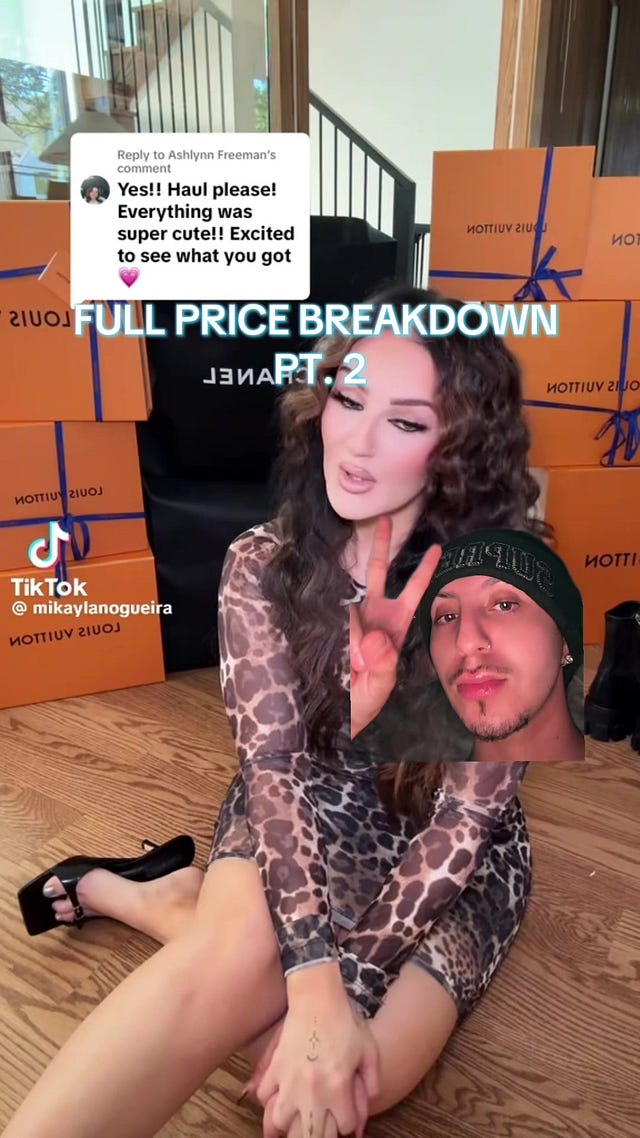
Meanwhile, on TikTok, influencers are losing their luster. After Mikayla Nogueira’s $250K+ luxury shopping haul and subsequent failure to give back during the holidays alongside Jaclyn Hill’s tone-deaf lamentation of the drop in her engagement, a new conversation about influencers, overconsumption, and income gaps has come into focus. Viewers are tired of making people rich and famous, only to be dismissed and commodified. At some point, it becomes cruel to flaunt wealth extracted from the backs of others, while refusing to share that wealth.
Pop’s Creative Bankruptcy
All the while, we’re still feeling the aftershocks of the stink bomb that was Taylor Swift’s last album, The Life of a Showgirl, an ironic misstep also taken last year by her former foe, Katy Perry, with her previous album, 143. These two millennial divas proved themselves as unable to read a room as the aforementioned influencers, by releasing lazy, derivative slop, knowing that at least their loyal followers would lap it up. Both were still blindsided by their floppery, and responded with defensiveness and contempt for their own fans who weren’t able to get on board with what they were selling. Katy crashed out on TikTok on multiple occasions, and Taylor revealed too much truth, asserting that if you’re talking about her at all, you’re “helping.”
Audiences are fully aware that a large faction of artists and creators are simply chasing money, as opposed to their approval or admiration, which has made the viewer experience profoundly depressing.
The tragic irony is that audiences have never been more vocal about what they want—originality, authenticity, creative risk—yet the machine keeps churning out the same safe, sanitized product. As long as there's profit to be extracted, corporations will continue to prioritize their bottom line over our collective sanity. We're left waiting for the inevitable: either a creative renaissance born from rebellion, or more of the same numbing monotony until we're too exhausted to care.
2025 Was a Bad Year for Millennials

This year was marked by disappointment after disappointment, as we watched our favorite stars transition from beloved icons to untouchable elites. In the new order that feels reminiscent of medieval serfdom, many of us had hoped that the artists we’ve followed for decades would side with us, their fans, rather than the overlorrds (corporations and men in suits). Instead, we were given the middle finger and served up lazy output for quick cash.